Read the Bible as a Story, Not a Collection
The Bible reads differently when you encounter it in the order events happened. Psalms feel more personal when you read them during David's flight from Saul. The prophets make more sense when you're reading them alongside the kings they were warning.
A chronological reading plan reorganizes Scripture into the flow of history: from creation to the new creation.
Here is a month-by-month guide for reading through the Bible chronologically in 2026.
January: Creation to the Call of Abraham
Genesis 1-11, Job 1-2, 38-42
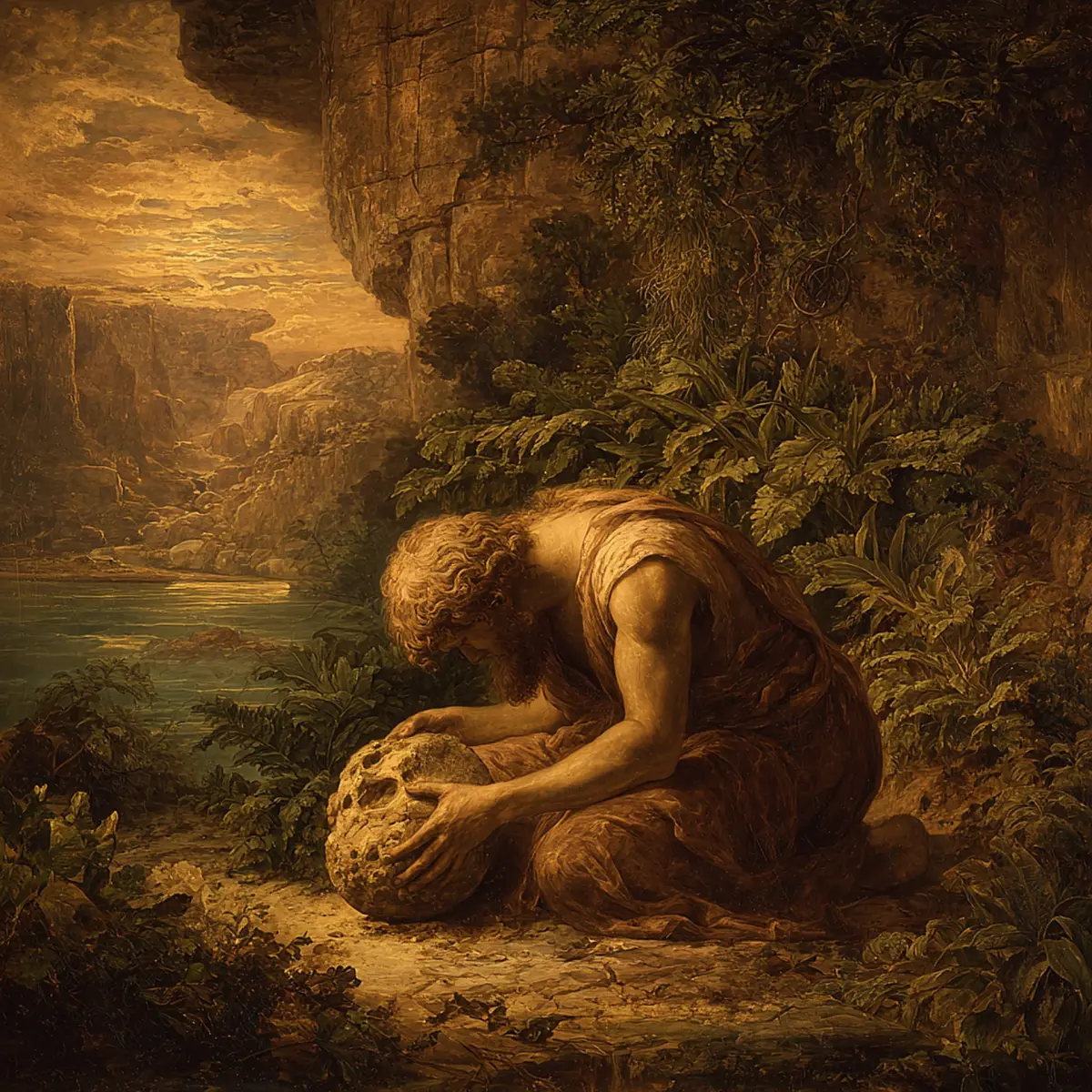
The Big Story: The Bible begins not with Israel, not with Jesus, but with creation. Chapters 1-2 establish that all of reality comes from God and is declared "very good." Chapters 3-11 trace the catastrophic unraveling: the fall, Cain and Abel, Noah and the flood, the tower of Babel.
Where Job fits: Job is placed here because it appears to belong to the patriarchal period, a world before the Law, where God communicates directly without a priesthood or temple. Reading Job's suffering and God's answer from the whirlwind early in the year is a profound introduction to how God works in an unjust world.
Daily reading: ~4 chapters/day
February: The Patriarchs (Abraham, Isaac, Jacob, Joseph)
Genesis 12-50
The Big Story: God calls a specific man, Abraham, out of Ur, and begins the covenant that will define the rest of Scripture. The promises: a land, a people, and a blessing for all nations. Follow the often-messy story of Abraham's faith and failure, Isaac's quiet life, Jacob's wrestling, and Joseph's remarkable story of betrayal, slavery, and redemption.
Key moment: Genesis 50:20, "You intended to harm me, but God intended it for good." Joseph's words to his brothers, one of the earliest statements of Romans 8:28 in the Bible.
March: Egypt, Exodus, and the Law
Exodus 1-40, Leviticus 1-27
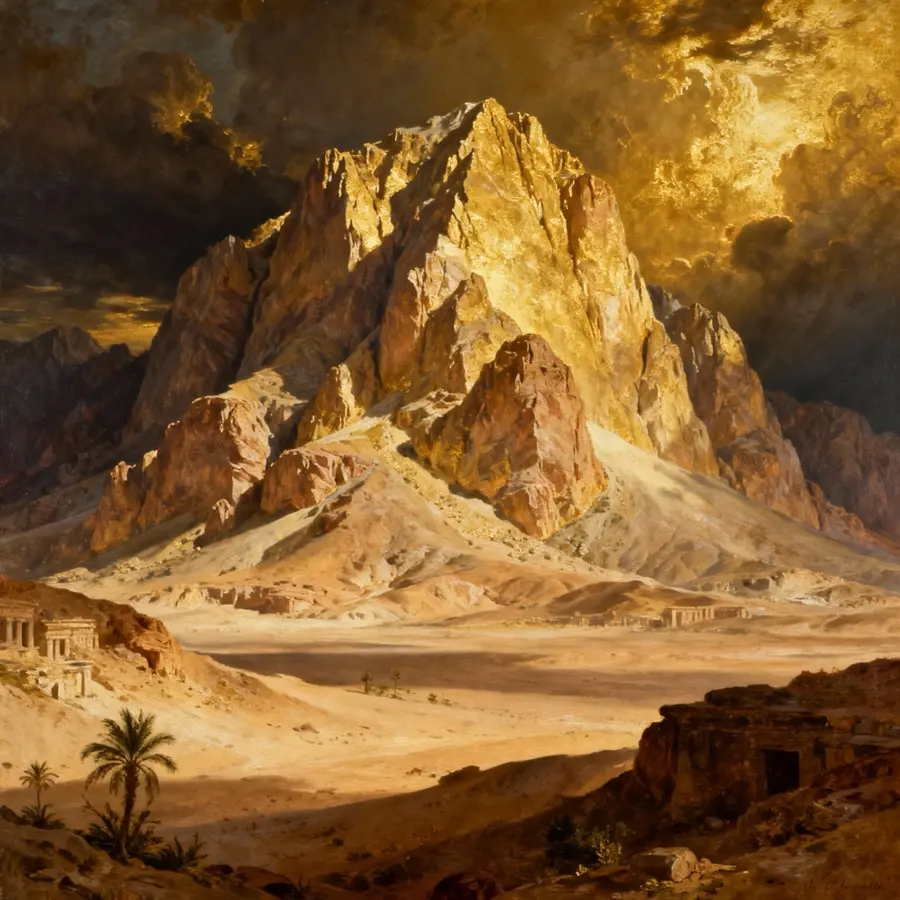
The Big Story: 400 years have passed. Abraham's descendants are now slaves in Egypt. Moses is called from a burning bush. The ten plagues. The Passover. The parting of the Red Sea. The giving of the Law at Sinai.
Leviticus: The book most people abandon their Bible reading plans on. Read it for what it is: God establishing how a holy community lives, worships, and handles sin. The sacrificial system points forward to Christ.
April: Wilderness and Entering the Land
Numbers, Deuteronomy, Joshua
The Big Story: 40 years of wilderness wandering, the consequence of unbelief at Kadesh-Barnea. A new generation rises. Moses gives his final sermon (Deuteronomy) before dying on the mountaintop. Joshua leads Israel across the Jordan and into Canaan.
May: Judges and Ruth
Judges, Ruth
The Big Story: A dark period. No king. Every man does what is right in his own eyes. The recurring cycle: apostasy → oppression → crying out → deliverance → rest → apostasy. Samson and Delilah. Gideon. Deborah.
Ruth: A beautiful counter-narrative: faithfulness, hesed (covenant love), and God's providence in ordinary life.
June: The United Kingdom (Saul, David, Solomon)
1 Samuel, 2 Samuel, 1 Kings 1-11, Psalms of David, Proverbs, Ecclesiastes
The Big Story: Israel demands a king. God gives them Saul, whose reign ends in tragedy. David rises, "a man after God's own heart", and Israel's golden era begins. Solomon builds the Temple but ends in idolatry.
Psalms: In a chronological plan, you read the relevant Psalms alongside the events that inspired them. Psalm 51 lands after 2 Samuel 11-12. Psalm 3 lands during Absalom's rebellion.
July: The Divided Kingdom and the Prophets
1 Kings 12 to 2 Kings 17, Amos, Hosea, Isaiah 1-39
The Big Story: The kingdom splits: ten tribes in the north (Israel), two in the south (Judah). Both go through cycles of good and bad kings. The northern kingdom falls to Assyria in 722 BC. The prophets (Amos, Hosea, Isaiah) speak into this chaos.
August: Judah's Final Kings and Babylonian Exile
2 Kings 18-25, 2 Chronicles, Jeremiah, Lamentations, Ezekiel, Daniel
The Big Story: The southern kingdom's final decades. Hezekiah and Josiah, bright spots of reform. Jehoiakim and Zedekiah, the final kings before Babylonian conquest. Jerusalem falls in 586 BC. The Temple is destroyed. Exile.
The Exilic Prophets: Jeremiah weeps over the destruction (Lamentations). Ezekiel receives visions at the river Chebar. Daniel rises in the Babylonian court.
September: Return from Exile
Ezra, Nehemiah, Esther, Haggai, Zechariah, Malachi
The Big Story: Cyrus of Persia issues a decree allowing the exiles to return. Ezra leads the spiritual restoration. Nehemiah rebuilds the walls of Jerusalem. Esther saves her people in Persia. The prophets Haggai, Zechariah, and Malachi urge the returned community to complete the Temple and live faithfully.
End of the Old Testament: Malachi closes with a promise: Elijah will come before the great and dreadful day of the Lord. Then: 400 years of silence.
October: The Gospels, the Life of Jesus
Matthew, Mark, Luke, John
The Big Story: The Gospels are read in parallel, and each offers its unique perspective on Jesus's birth, ministry, death, and resurrection. Matthew writes to Jews, showing Jesus as the fulfillment of the Old Testament. Mark is fast-paced action. Luke is the literary historian. John is the theological meditation.
November: The Early Church and Paul's Letters
Acts, Romans, 1-2 Corinthians, Galatians, Ephesians, Philippians, Colossians, 1-2 Thessalonians
The Big Story: The Holy Spirit comes at Pentecost. The church explodes across the Roman world. Paul's letters, written to specific churches at specific moments, explain the meaning of the death and resurrection of Jesus and how to live in light of it.
December: The General Letters and Revelation
1-2 Timothy, Titus, Philemon, Hebrews, James, 1-2 Peter, 1-3 John, Jude, Revelation
The Big Story: The letters to Timothy and Titus guide the next generation of church leaders. Hebrews shows how the entire Old Testament sacrificial system pointed to Christ. James calls for practical faith. Peter encourages suffering believers. Revelation, read in December, brings the whole story of Scripture to its conclusion: the new creation, the New Jerusalem, the end of tears.
Tips for Staying Consistent
1. Use audio. An audio Bible makes it easy to listen during your commute, workout, or household chores. You can hit your daily reading without sitting down at all.
2. Don't try to catch up all at once. If you miss 3 days, read 3 days' worth over the next week, not all in one day.
3. Read for story, not analysis. A reading plan is not a commentary. Move through it.
4. Talk about it. Reading with a friend, spouse, or small group dramatically increases completion rates.
Start Your 2026 Reading Plan With BibleNow
BibleNow gives you the full Bible in audio: 111 narrated stories, the full Bible text, and Lumi, the BibleNow companion that answers any question that comes up along the way.
Frequently asked questions
What is a chronological Bible reading plan?
A chronological Bible reading plan reorganizes the 66 books of the Bible in the order the events occurred, rather than the canonical order in which they appear in Scripture. For example, in a chronological plan, Job (which likely occurred during the time of the patriarchs) is read after Genesis; the Psalms of David are read during the historical narrative of 1-2 Samuel rather than separately; and the prophetic books are read alongside the kings during whose reigns they ministered. This approach helps readers understand the historical flow of Scripture and see how the different books connect to each other in time.
How long does it take to read the Bible in a year?
Reading the entire Bible in a year requires reading approximately 3-4 chapters per day, which takes an average of 15-20 minutes of reading time. For audio Bible listeners, the full Bible takes approximately 70-80 hours of listening time, roughly 12-15 minutes per day for a year. The key is consistency: missing days can be made up without falling far behind if you miss just one or two days. Many people find that having an audio Bible app makes it much easier to stay consistent, since they can listen while commuting, exercising, or doing household tasks.
What is the best chronological Bible reading plan?
Several well-regarded chronological reading plans exist: the F260 (focused 260-day plan covering the most narrative-rich sections); the Canonical plan (straight through from Genesis to Revelation in 365 days); and the Chronological plan (reorganized by when events occurred). The best plan is the one you will actually complete. For beginners, the canonical order (Genesis through Revelation) is often easier because it follows the Bible as printed. For those who have read through before, the chronological plan offers fresh perspective by showing historical connections between books.
Is it better to read or listen to the Bible?
Both have proven benefits. Reading engages visual memory and allows highlighting and note-taking. Listening engages auditory memory, can reach higher emotional engagement (especially with dramatized audio), and can be done while doing other tasks. Studies of learning and retention suggest that combining both (listening while following the text) produces the highest retention. Many experienced Bible readers use audio during commutes or exercise and text-based reading for study. For those just starting, audio is often the more accessible entry point.

Live it in BibleNow
Listen to Bible stories with their painting, read Scripture on paper or at night, and ask Lumi anything.