Why These Scriptures Matter
Pentecost Sunday (May 24, 2026) is one of the three great feasts of the Christian year, alongside Christmas and Easter. But while most Christians can quote the Christmas story from Luke 2 and the resurrection from John 20, many are less familiar with the specific texts that anchor Pentecost.
That is what this guide is for.
Below are every major Bible passage connected to the Day of Pentecost: the event text in Acts 2, the Old Testament prophecy that Peter quoted in his sermon, the scriptures Jesus taught in the Upper Discourse the night before his death, and the key New Testament passages that show what the Spirit does in every believer's life.
1. The Primary Passage: Acts 2:1-4
This is the Day of Pentecost. Every element of this text is significant.
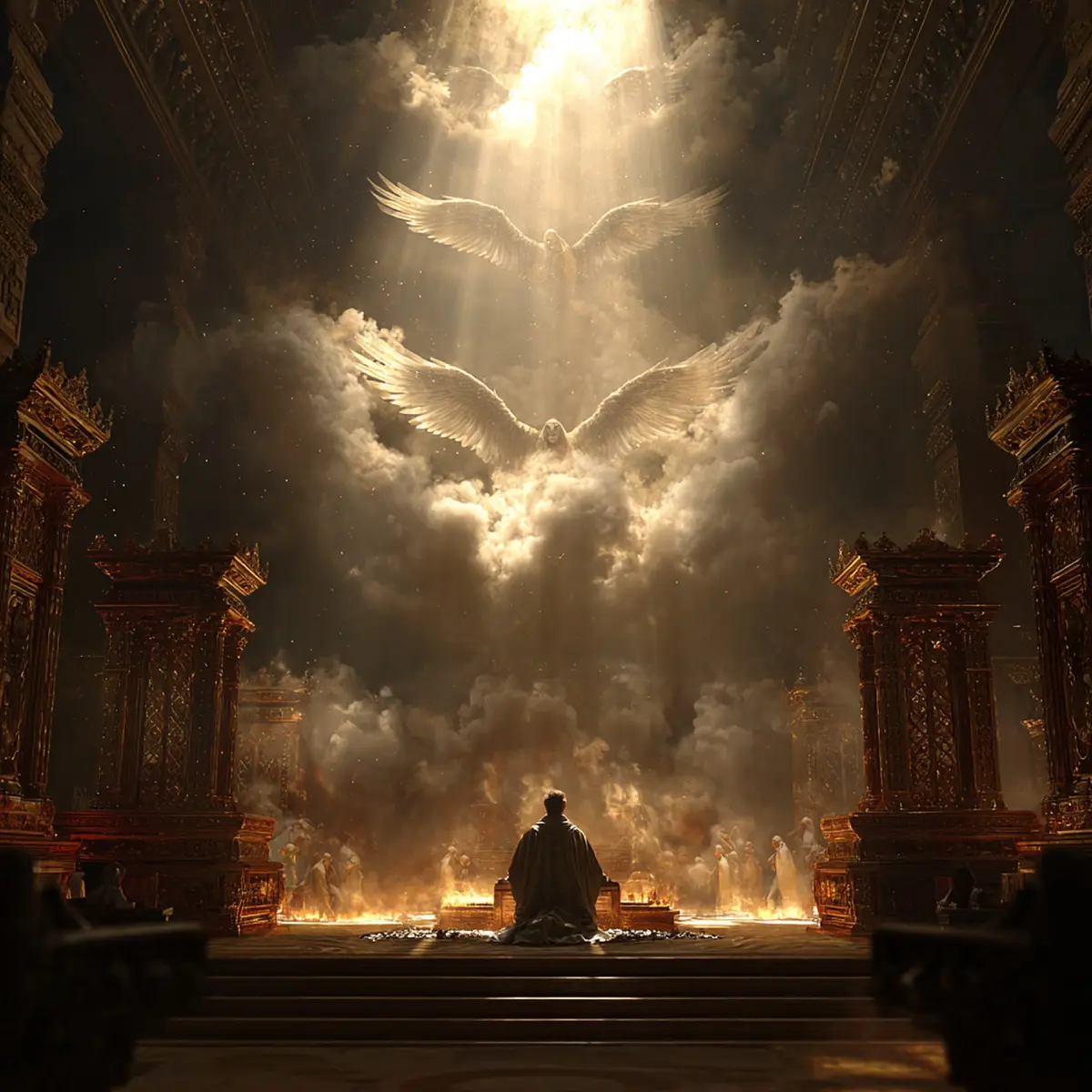
When the day of Pentecost had fully come, they were all together in one place. Suddenly there came from the sky a sound like the rushing of a mighty wind, and it filled the whole house where they were sitting. Tongues like fire appeared and were distributed to them, and one sat on each of them. They were all filled with the Holy Spirit and began to speak with other languages, as the Spirit gave them the ability to speak. (Acts 2:1-4)
"When the day of Pentecost came": this was the Jewish feast of Shavuot, 50 days after Passover. Jerusalem was packed with pilgrims from across the known world. The setting is not accidental: the Spirit's arrival would be witnessed by Jews from every nation.
"They were all together in one place": the 120 followers of Jesus (Acts 1:15) had been gathered in prayer for 10 days since the ascension, waiting as Jesus instructed (Acts 1:4).
"A sound like the blowing of a violent wind": Pneuma in Greek means both wind and spirit. This is a deliberate echo of Genesis 1:2, where the Spirit of God hovered over the waters, and Ezekiel 37, where the Spirit-wind brought life to dry bones.
"Tongues of fire... rested on each of them": not gathered in one place, but distributed. The presence of God, always before associated with one location (the burning bush, the tabernacle, the temple), now rested personally on each individual believer.
"All of them were filled with the Holy Spirit": all. Not just the apostles, not just the spiritually mature. All 120.
2. The Crowd's Reaction: Acts 2:5-13
Now there were dwelling in Jerusalem devout Jews from every nation under heaven. When this sound was heard, the multitude came together and were bewildered, because everyone heard them speaking in his own language... "Behold, aren't all these who speak Galileans? How do we hear, everyone in our own native language?" (Acts 2:5-8)
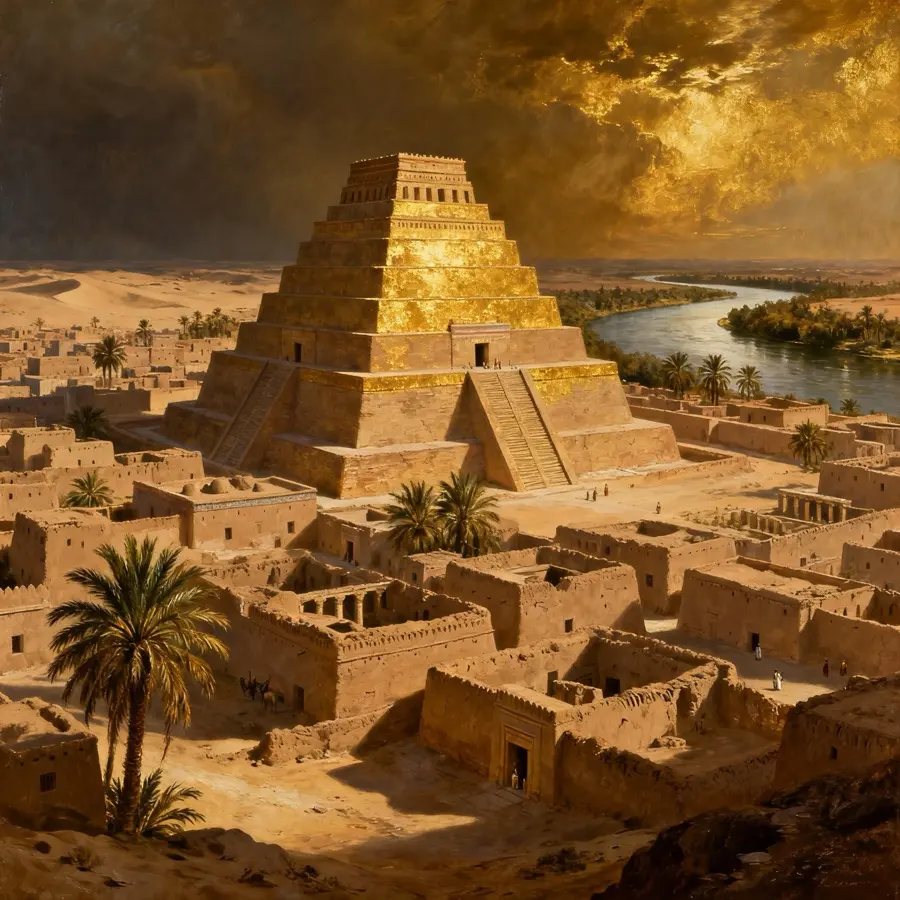
The significance here is the reversal of Babel. In Genesis 11, humanity's unified language was confused and people were scattered. At Pentecost, the Spirit crossed every language barrier simultaneously: the message of Jesus reached every nation in their own tongue. What was broken at Babel began to be restored.
3. The Old Testament Prophecy: Joel 2:28-32
Peter's first act was to open Scripture. His sermon in Acts 2:14-36 is one of the most important in the New Testament, and it begins with Joel 2:28-32.
"It will be in the last days, says God, that I will pour out my Spirit on all flesh. Your sons and your daughters will prophesy, your young men will see visions, and your old men will dream dreams. Yes, and on my servants and on my handmaidens in those days, I will pour out my Spirit, and they will prophesy. I will show wonders in the sky above, and signs on the earth beneath... And it will be that whoever will call on the name of the Lord will be saved." (Joel 2:28-32, quoted in Acts 2:17-21)
Four things stand out in this prophecy:
- "All flesh": the Spirit is not reserved for priests, prophets, or kings. He is poured out on all.
- "Sons and daughters": women are explicitly included as recipients of the Spirit and as prophets.
- "Servants and handmaidens": social rank is no barrier.
- "Whoever will call on the name of the Lord will be saved": this is the invitation Peter builds toward.
Joel's prophecy was given approximately 800 years before Pentecost. The moment in Acts 2 is its fulfillment.
4. The Psalms Peter Quoted: Psalm 16 and Psalm 110
After Joel, Peter quoted two psalms of David to prove that the resurrection of Jesus was not a surprise but was prophesied.
Psalm 16:8-11
"I saw the Lord always before my face, for he is at my right hand, that I should not be moved. Therefore my heart was glad, and my tongue rejoiced. Moreover my flesh also will dwell in hope, because you will not leave my soul in the place of the dead, neither will you allow your Holy One to see decay." (Psalm 16:8-11, quoted in Acts 2:25-28)
Peter's argument: David, who wrote this psalm, died and was buried, and his tomb is still with us (Acts 2:29). David was not speaking of himself. He was speaking prophetically of the Messiah, who would not be abandoned to death but raised.
Psalm 110:1
"The Lord said to my Lord, 'Sit at my right hand until I make your enemies a footstool for your feet.'" (Psalm 110:1, quoted in Acts 2:34-35)
David calls his own descendant (the Messiah) "my Lord", which only makes sense if the Messiah is more than a human king. This verse is the most quoted Old Testament text in the entire New Testament.
5. The Conclusion of Peter's Sermon: Acts 2:36-38
"Let all the house of Israel therefore know certainly that God has made him both Lord and Christ, this Jesus whom you crucified." Now when they heard this, they were cut to the heart, and said to Peter and the rest of the apostles, "Brothers, what shall we do?" Peter said to them, "Repent, and be baptized, every one of you, in the name of Jesus Christ for the forgiveness of sins, and you will receive the gift of the Holy Spirit." (Acts 2:36-38)
Acts 2:38 is one of the most memorized verses in Scripture for good reason: it gives the four-element response to the gospel: repentance, baptism, forgiveness of sins, and the gift of the Holy Spirit. The Spirit who came dramatically on 120 people at Pentecost is the same Spirit promised to every person who turns to Christ.
6. Jesus Promised This: John 14:15-17
Pentecost did not happen without warning. The night before the crucifixion, Jesus told his disciples exactly what was coming.
"If you love me, keep my commandments. I will pray to the Father, and he will give you another Counselor, that he may be with you forever: the Spirit of truth, whom the world can't receive, for it doesn't see him and doesn't know him. You know him, for he lives with you and will be in you." (John 14:15-17)
Three things Jesus says about the Spirit here:
- He is another advocate, the same kind as Jesus himself (the Greek word is parakletos, also translated Comforter or Helper)
- He will be with believers and in believers: a permanent, internal presence
- He is the Spirit of truth: his role is always aligned with what is true
7. The Spirit's Work Explained: John 16:7-15
"Nevertheless I tell you the truth: It is to your advantage that I go away, for if I don't go away, the Counselor won't come to you. But if I go, I will send him to you. When he has come, he will convict the world about sin, about righteousness, and about judgment... However when he, the Spirit of truth, has come, he will guide you into all truth." (John 16:7-8, 13)
Jesus frames the Spirit's sending as better than his own physical presence, because the Spirit would not be limited to one location. Jesus could only be in one place; the Spirit would be in every believer everywhere simultaneously.
8. The Spirit in Every Believer: Romans 8:9, 14-17
But you are not in the flesh but in the Spirit, if it is so that the Spirit of God dwells in you. But if any man doesn't have the Spirit of Christ, he is not his. (Romans 8:9)
Paul makes this stark: having the Holy Spirit is not a second-tier experience for especially devout Christians. It is the definition of belonging to Christ. Every genuine believer has the Spirit.
For as many as are led by the Spirit of God, these are children of God. For you didn't receive the spirit of bondage again to fear, but you received the Spirit of adoption, by whom we cry, "Abba, Father!" The Spirit himself testifies with our spirit that we are children of God. (Romans 8:14-16)
The Spirit is the source of the believer's confidence before God: the internal testimony that you are known and loved by the Father.
9. The Fruit of the Spirit: Galatians 5:22-23
But the fruit of the Spirit is love, joy, peace, patience, kindness, goodness, faith, gentleness, and self-control. Against such things there is no law. (Galatians 5:22-23)
This passage describes what the Spirit produces in the character of a believer over time. It is not a checklist but a description of a life increasingly shaped by the Spirit's work. These nine qualities are all relational: they describe how a Spirit-filled person relates to God and to others.
10. The Gifts of the Spirit: 1 Corinthians 12:4-11
Now there are various kinds of gifts, but the same Spirit. There are various kinds of service, and the same Lord. There are various kinds of workings, but the same God who works all things in all. But to each one is given the manifestation of the Spirit for the profit of all. (1 Corinthians 12:4-7)
Paul lists gifts including wisdom, knowledge, faith, healing, miraculous powers, prophecy, discernment, tongues, and interpretation. The key phrase: "for the common good." The Spirit's gifts are not given as personal trophies. They are given for the building up of the whole church.
Putting It Together for Pentecost Sunday
If you are preparing for Pentecost Sunday, whether for a sermon, a small group, a personal devotional, or a family reading, here is a natural reading sequence that tells the full story:
- Genesis 11:1-9 (Babel: what Pentecost reverses)
- Joel 2:28-32 (the prophecy)
- Acts 1:4-5, 8 (Jesus' final promise before the ascension)
- Acts 2:1-41 (the full event, Peter's sermon, the response)
- John 14:15-17; 16:7-15 (Jesus' own teaching on the Spirit)
- Romans 8:9-17 (the Spirit in every believer)
- Galatians 5:22-23 (the fruit of the Spirit)
Listen to These Passages with BibleNow
The Day of Pentecost is one of the most dramatic events in Scripture: the rushing wind, the fire, Peter standing before thousands in Jerusalem, 3,000 people responding in a single day. Reading it is powerful. Hearing it read aloud brings the scene to life in a different way.
In BibleNow you can listen to Acts 2 and every passage in this guide in the full Bible, chapter by chapter. Pentecost is also one of the 17 stops on BibleNow's one-year journey from Eden to the New Jerusalem. The app also includes 111 Bible stories narrated chapter by chapter by a professional voice, with on-screen text that lights up in time with the narration and adjustable playback speed. And if a question comes up as you go, Lumi, the BibleNow companion that answers your questions about the Bible, is there to help.
Whether you are preparing a Pentecost Sunday message or simply want to experience Acts 2 in a new way, the BibleNow app is free to download on iOS and Android.
Download BibleNow for iOS | Download for Android
Pentecost Sunday 2026: May 24. Fifty days after Easter. The birthday of the church.
Frequently asked questions
What is the main scripture for the Day of Pentecost?
The primary scripture for the Day of Pentecost is Acts 2:1-4: 'When the day of Pentecost had fully come, they were all together in one place. Suddenly there came from the sky a sound like the rushing of a mighty wind, and it filled the whole house where they were sitting. Tongues like fire appeared and were distributed to them, and one sat on each of them. They were all filled with the Holy Spirit and began to speak with other languages, as the Spirit gave them the ability to speak.' This passage describes the founding moment of the Christian church.
What Old Testament scripture did Peter quote at Pentecost?
Peter quoted Joel 2:28-32 as the fulfillment of what was happening: 'It will be in the last days, says God, that I will pour out my Spirit on all flesh. Your sons and your daughters will prophesy. Your young men will see visions. Your old men will dream dreams. Yes, and on my servants and on my handmaidens in those days, I will pour out my Spirit, and they will prophesy.' He also quoted Psalm 16:8-11 and Psalm 110:1 to prove from Scripture that the Messiah had to die and rise, and that Jesus was that Messiah.
What does Acts 2:38 say?
Acts 2:38 is Peter's answer when the crowd asked what they should do after hearing his sermon: 'Repent, and be baptized, every one of you, in the name of Jesus Christ for the forgiveness of sins, and you will receive the gift of the Holy Spirit.' This verse has been central to Christian theology on salvation and the Spirit ever since. It connects repentance, baptism, forgiveness, and the gift of the Holy Spirit as the response to Peter's proclamation about Jesus.
What scriptures are good for a Pentecost Sunday reading or sermon?
For Pentecost Sunday, the most commonly used scriptures are: Acts 2:1-21 (the full event and Peter's opening sermon), Joel 2:28-32 (the OT prophecy), John 14:15-17 (Jesus promises the Comforter), John 16:7-15 (the Spirit's work explained), Romans 8:9-17 (the Spirit in every believer), and Galatians 5:22-23 (the fruit of the Spirit). Many churches also read Genesis 11 (Tower of Babel) alongside Acts 2 to show the reversal of that event.
When is Pentecost Sunday in 2026?
Pentecost Sunday in 2026 fell on May 24, the fiftieth day counting from Easter Sunday (April 5). The name comes from the Greek word pentekostos, meaning 'fiftieth.' The date shifts each year because it is always calculated as 50 days after Easter, which is itself a moveable feast tied to the lunar calendar.

Live it in BibleNow
Listen to Bible stories with their painting, read Scripture on paper or at night, and ask Lumi anything.