Before It Was a Christian Feast, It Was Jewish
To understand Pentecost fully, you have to start not in Acts 2 but in Leviticus 23.
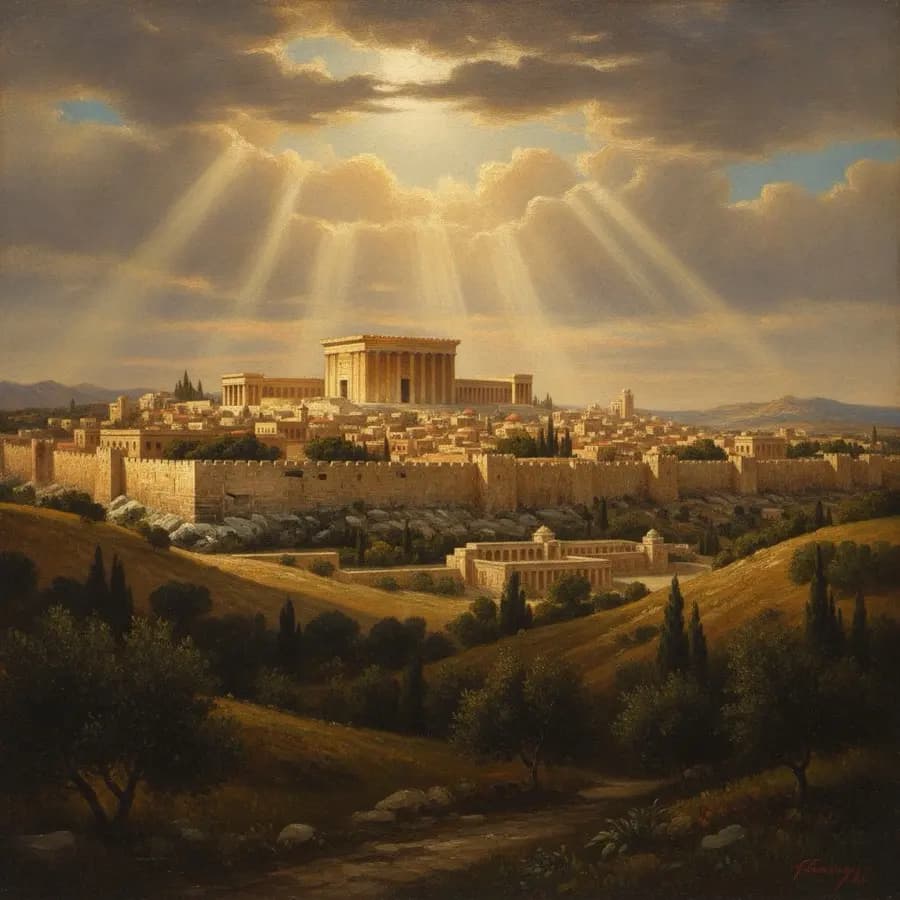
The Shavuot (Hebrew, "weeks") was one of three pilgrimage festivals that every observant Jewish male was required to attend in Jerusalem (Deuteronomy 16:16). It came exactly 50 days (seven weeks plus one day) after the Passover offering, which is why the Greek-speaking world called it Pentekostos (fiftieth).
Shavuot was a wheat harvest celebration. Farmers brought the firstfruits of their grain to the temple. It was also later associated with the giving of the Torah at Sinai, the idea being that just as Israel was physically freed from Egypt at Passover, they were spiritually constituted as a nation at Sinai 50 days later.
This is the feast that was being celebrated in Jerusalem when the Holy Spirit came. The city was packed with Jewish pilgrims "from every nation under heaven" (Acts 2:5). The timing was not accidental.
The Day of Pentecost: Acts 2 in Detail
The Setting
After the resurrection and ascension of Jesus, 120 followers were gathered in Jerusalem, waiting as Jesus had instructed (Acts 1:4-5). They were in the upper room, the same location as the Last Supper, according to many traditions.
The Sound and the Fire
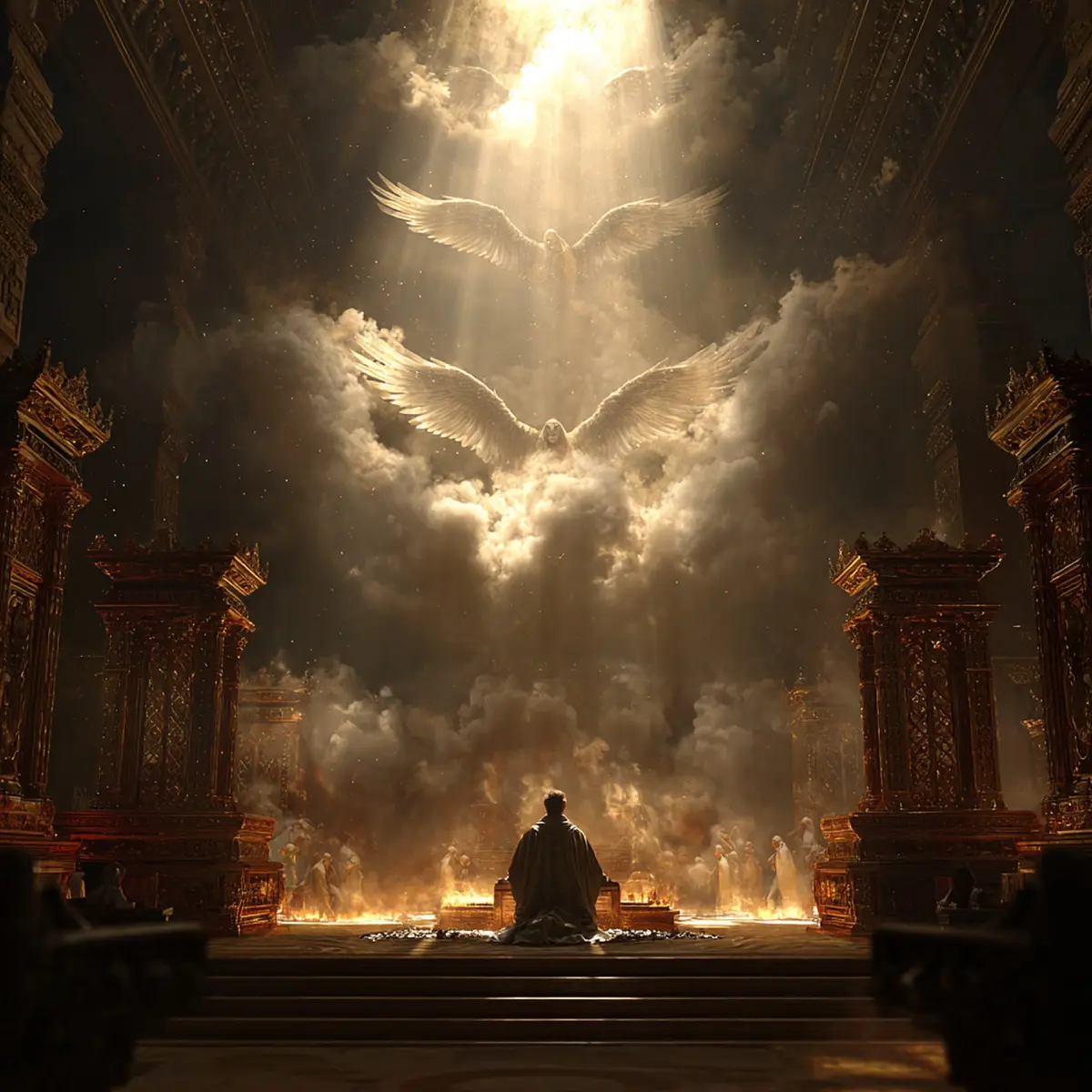
"Suddenly a sound like the blowing of a violent wind came from heaven and filled the whole house where they were sitting" (Acts 2:2).
The imagery is deliberate and carries theological weight. Wind (pneuma in Greek, ruach in Hebrew) is the same word as "Spirit" in both languages. In Genesis 1:2, the Spirit of God "hovered over the waters." In Ezekiel 37, dry bones came to life when the Spirit-wind breathed into them.
"They saw what seemed to be tongues of fire that separated and came to rest on each of them" (Acts 2:3).
Fire in the Old Testament consistently represented the presence of God: the burning bush (Exodus 3), the pillar of fire in the wilderness (Exodus 13), the fire on the altar. But here, the fire did not gather in one place; it separated and rested individually on each person. The presence of God was now distributed personally, person by person.
The Languages
"All of them were filled with the Holy Spirit and began to speak in other tongues as the Spirit enabled them" (Acts 2:4).
The Greek word is glossais: languages. The pilgrims crowding Jerusalem heard their own native languages coming from these Galilean fishermen. "Parthians, Medes and Elamites; residents of Mesopotamia, Judea and Cappadocia, Pontus and Asia, Phrygia and Pamphylia..." (Acts 2:9-11).
This is the deliberate reversal of Babel (Genesis 11), where humanity's languages were confused and people scattered. At Pentecost, God reversed the curse: through the Spirit, the message of Jesus crossed every language barrier simultaneously.
Peter's Sermon
Peter stood and preached. He quoted Joel 2:28-32: "In the last days, God says, I will pour out my Spirit on all people. Your sons and daughters will prophesy, your young men will see visions, your old men will dream dreams."
This was the fulfillment of Joel's prophecy. The "last days" had begun.
He then quoted Psalm 16 and Psalm 110 to demonstrate from their own Scripture that the Messiah had to die and rise, and that Jesus of Nazareth, whom they had crucified, was that Messiah.
The crowd was "cut to the heart" (Acts 2:37) and asked what to do.
Peter's answer: "Repent and be baptized, every one of you, in the name of Jesus Christ for the forgiveness of your sins. And you will receive the gift of the Holy Spirit" (Acts 2:38).
That day, approximately 3,000 people were baptized. The church was born.
What the Holy Spirit Does
The event at Pentecost was not a one-time curiosity. It inaugurated a new era of how God relates to humanity. The Holy Spirit plays seven key roles in the New Testament:
1. Convicts of Sin
"When he comes, he will prove the world to be in the wrong about sin and righteousness and judgment" (John 16:8). The Holy Spirit is responsible for the internal work of making a person aware of their need for God. Evangelism plants the seed; the Spirit brings the conviction.
2. Regenerates
"No one can enter the kingdom of God unless they are born of water and the Spirit" (John 3:5). The new birth (the transformation from death to spiritual life) is the work of the Spirit.
3. Indwells
"Do you not know that your bodies are temples of the Holy Spirit, who is in you, whom you have received from God?" (1 Corinthians 6:19). Every believer is permanently indwelt by the Spirit.
4. Guides Into Truth
"When he, the Spirit of truth, comes, he will guide you into all the truth" (John 16:13). The Spirit illuminates Scripture, gives wisdom, and leads the believer in understanding God's Word.
5. Intercedes in Prayer
"The Spirit himself intercedes for us through wordless groans... the Spirit intercedes for God's people in accordance with the will of God" (Romans 8:26-27). When you don't know how to pray, the Spirit prays through you.
6. Produces Fruit
The character qualities of love, joy, peace, patience, kindness, goodness, faithfulness, gentleness, and self-control (Galatians 5:22-23) are produced by the Spirit in the life of a believer who walks with him.
7. Distributes Gifts
"To each one the manifestation of the Spirit is given for the common good... All these are the work of one and the same Spirit, and he distributes them to each one, just as he determines" (1 Corinthians 12:7, 11). Spiritual gifts (teaching, prophecy, mercy, healing, administration, and others) are given by the Spirit for the building up of the church.
The Holy Spirit and the Trinity
Pentecost is one of the clearest New Testament expressions of the Trinity. At the ascension, Jesus promised to send the Spirit (John 15:26). The Father sent the Son; the Son sends the Spirit; the Spirit glorifies the Son (John 16:14) and leads back to the Father.
The Spirit is not a force, an influence, or an impersonal energy. He is consistently described with personal pronouns in the New Testament, grieves (Ephesians 4:30), can be lied to (Acts 5:3), intercedes (Romans 8:26), and knows the depths of God (1 Corinthians 2:10-11).
What Different Christian Traditions Believe About Pentecost
Catholic and Orthodox traditions celebrate Pentecost as the birthday of the Church. They emphasize continuity of the Spirit's work through the sacraments.
Pentecostal and charismatic traditions emphasize the ongoing availability of all the spiritual gifts described in Acts 2 and 1 Corinthians 12, including tongues, prophecy, and healing, as normal Christian experience today.
Reformed and evangelical traditions generally believe the miraculous sign gifts of Pentecost were foundational to the apostolic era and may have functioned differently then, while affirming that the Spirit's work of regeneration, sanctification, and gifting continues fully today.
Despite these differences, all major Christian traditions agree on the core: the Holy Spirit is God, present in every believer, and the source of the Christian life.
Why Pentecost Still Matters
Pentecost is not ancient history. It is the beginning of the current chapter of the story.
Every believer who has experienced the Spirit's conviction, received his comfort in grief, sensed his guidance in a decision, felt his prompting toward courage or kindness: these experiences are all downstream of Acts 2.
The rushing wind and the fire of tongues were inaugural signs. The Spirit himself is still here.
Explore Acts 2 and the work of the Holy Spirit with BibleNow: https://biblenow.onelink.me/7rjl/z8us8bll
Frequently asked questions
What is Pentecost and when is it celebrated?
Pentecost is a Christian feast celebrated 50 days after Easter, commemorating the outpouring of the Holy Spirit on the apostles described in Acts 2. In 2026, Pentecost Sunday falls on May 24. The name comes from the Greek pentekostos, meaning 'fiftieth.' Pentecost was also an ancient Jewish harvest festival called Shavuot, celebrated 50 days after Passover, the same timing. Jesus' followers were gathered in Jerusalem for Shavuot when the Spirit came.
What happened on the day of Pentecost in Acts 2?
Acts 2 describes the followers of Jesus gathered together when suddenly a sound like a violent rushing wind filled the house and what appeared to be tongues of fire rested on each person. They began speaking in other languages. Jerusalem was filled with Jewish pilgrims from many nations for Shavuot, and each heard the disciples speaking in their own language. Peter then preached a sermon from Joel 2 and Psalm 16, and approximately 3,000 people were baptized that day: the birthday of the Christian church.
What does the Holy Spirit do according to the Bible?
The New Testament describes several roles of the Holy Spirit: He convicts of sin (John 16:8), guides into truth (John 16:13), intercedes in prayer (Romans 8:26), distributes spiritual gifts (1 Corinthians 12:7-11), produces the fruit of the Spirit (Galatians 5:22-23), seals believers as God's children (Ephesians 1:13-14), and empowers witness (Acts 1:8). He is the third person of the Trinity: not a force or influence but a person.
What is the difference between what happened at Pentecost and regular Christian life today?
At Pentecost, the Spirit was 'poured out' in a unique, inaugural, corporate event, the beginning of a new era of God's dealings with humanity. But the New Testament also promises that every believer receives the Holy Spirit at conversion (Romans 8:9; 1 Corinthians 12:13). What began at Pentecost as a dramatic public event is the same Spirit who indwells and works in every follower of Jesus today.
Do Christians today need to speak in tongues as evidence of the Holy Spirit?
Denominations disagree on this. Pentecostal and charismatic traditions teach that speaking in tongues is the initial evidence of Spirit baptism. Most Reformed and evangelical traditions hold that the gifts of the Spirit are distributed as the Spirit determines (1 Corinthians 12:11) and that no single gift is required of all believers. 1 Corinthians 12:29-30 asks rhetorically: 'Do all speak in tongues?', implying the answer is no.

Live it in BibleNow
Listen to Bible stories with their painting, read Scripture on paper or at night, and ask Lumi anything.