The Most Unlikely Heroine
In the ancient Persian Empire, a Jewish orphan girl named Hadassah, known by her Persian name Esther, was chosen to be queen.
She had not chosen power. Power had chosen her, suddenly and unexpectedly.
And then, when a genocide was planned against every Jew in the empire, she had to decide: use that power to save her people, at the risk of her own life, or stay silent and stay safe.
The Book of Esther is a short book (ten chapters), but it contains one of the most complete portraits of courage under pressure in all of Scripture.
Background: The Persian Empire
The story takes place during the reign of King Ahasuerus, widely identified with Xerxes I, who ruled Persia from 486 to 465 BC. The Persian Empire at this time stretched from India to Ethiopia (Esther 1:1), encompassing roughly 127 provinces.
Among its subjects were Jews who had been exiled from Judah during the Babylonian conquest and whose descendants had remained in Persia even after Cyrus permitted return.
Part 1: The Queen Is Deposed (Esther 1)
The story begins with a lavish royal banquet. King Ahasuerus, in a display of drunken pride, summoned Queen Vashti to appear before his guests to display her beauty. Vashti refused.
The king, humiliated, consulted his advisers. They recommended deposing Vashti, partly to punish her refusal and partly to send a message to all women in the empire that husbands were to be obeyed. Vashti was removed from her position as queen.
This created the vacancy that would change history.
Part 2: Esther Becomes Queen (Esther 2)
A search was conducted throughout the empire for a new queen. Beautiful young women were brought to the palace, given twelve months of beauty treatments, and presented to the king one by one.
Among them was a young Jewish woman named Hadassah, also called Esther. She was an orphan, raised by her older cousin Mordecai, who worked at the palace gate. Mordecai had instructed Esther to keep her Jewish identity secret.
When Esther was brought before the king:
"The king was attracted to Esther more than to any of the other women, and she won his grace and favor more than any of the other virgins. So he set a royal crown on her head and made her queen instead of Vashti." (Esther 2:17)
Esther became queen. But no one at court knew she was Jewish.
Part 3: Mordecai and Haman (Esther 2-3)
Around this time, Mordecai overheard a plot by two of the king's gatekeepers to assassinate Ahasuerus. He reported it to Esther, who told the king in Mordecai's name. The plotters were executed and the event was recorded in the royal chronicles.
Shortly after, the king promoted Haman, an Agagite, above all other nobles and required that people bow to him. Mordecai refused. The text doesn't fully explain why: possibly religious conviction, possibly the ancient enmity between Israel and Amalek (Haman was descended from Agag, king of Amalek).
Haman was furious. But executing Mordecai alone was not enough for him. When he learned Mordecai was Jewish, he plotted to destroy every Jew in the entire empire.
Haman approached the king with a proposal: a decree to destroy "a certain people" scattered throughout the provinces who keep "different customs" and do not obey the king's laws. He offered to pay 10,000 talents of silver into the royal treasury. The king agreed without demanding to know who the people were.
A decree was sent throughout the empire: on the thirteenth day of the month of Adar, every Jew (man, woman, and child) was to be killed, and their property seized.
Part 4: Mordecai's Challenge (Esther 4)
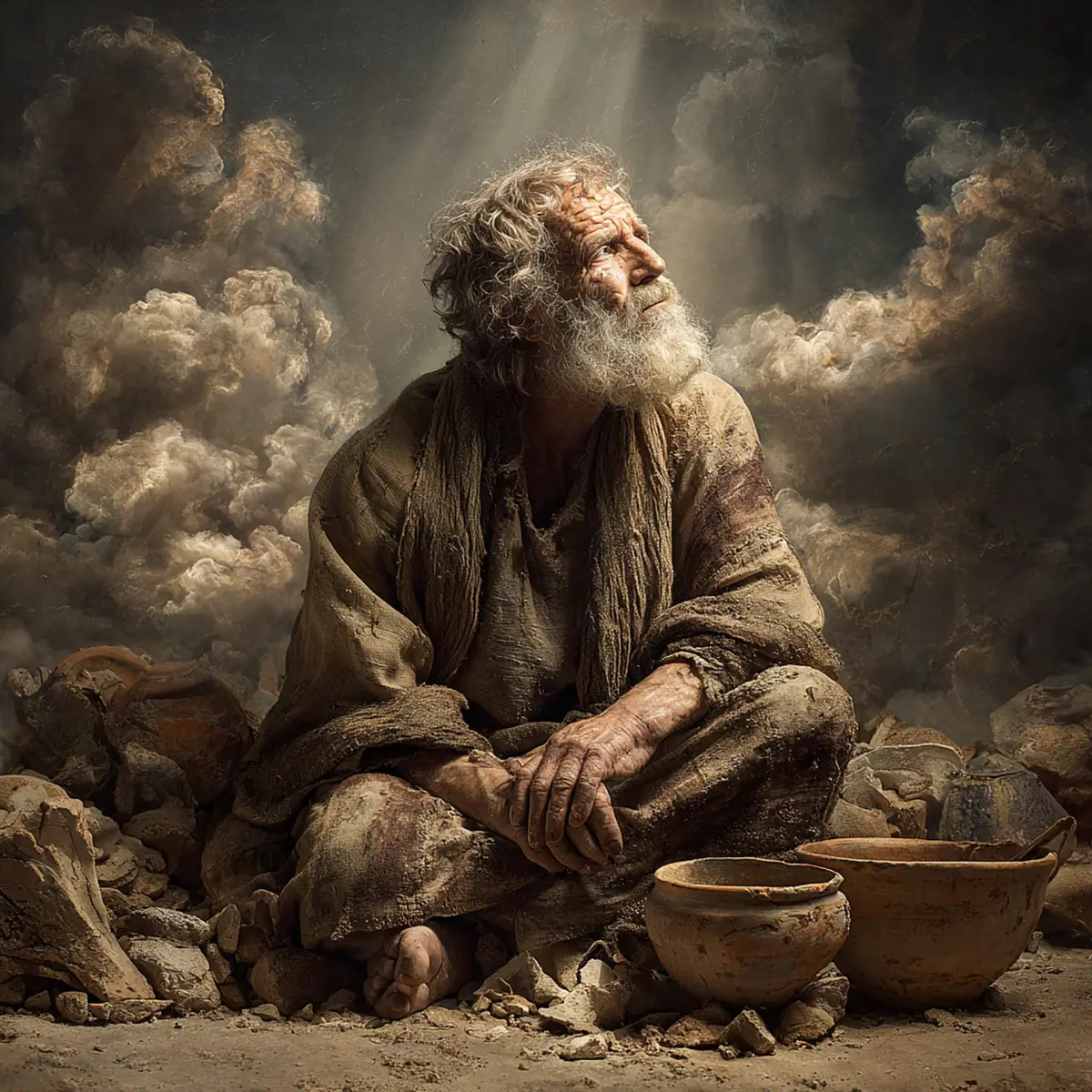
When Mordecai learned of the decree, he tore his clothes and put on sackcloth and ashes, the ancient sign of mourning and desperation. Throughout the city, Jews fasted and wept.
Esther sent a servant to find out what was wrong. Mordecai sent back a full account of everything and urged Esther to go to the king and beg for mercy.
Esther sent back a sobering response: Persian law was clear. Anyone who approached the king unsummoned could be executed on the spot. Even the queen. The only exception was if the king extended his golden scepter. The king had not summoned Esther in thirty days.
Mordecai's response became one of the most famous challenges in Scripture:
"Do not think that because you are in the king's house you alone of all the Jews will escape. For if you remain silent at this time, relief and deliverance for the Jews will arise from another place, but you and your father's family will perish. And who knows whether you have not come to the kingdom for such a time as this?" (Esther 4:13-14)
Esther's answer showed her decision:
"Go, gather together all the Jews who are in Susa, and fast for me. Do not eat or drink for three days, night or day. I and my attendants will fast as well. When this is done, I will go to the king, even though it is against the law. And if I perish, I perish." (Esther 4:16)
Part 5: Esther's Courage (Esther 5-7)
After three days of fasting, Esther dressed in her royal robes and approached the king's inner court unsummoned.
The king extended his golden scepter. She was safe.
But Esther did not immediately make her request. She invited the king, and Haman, to a banquet. At the banquet, the king pressed her again: "What is your request? It will be given to you." Esther invited them to a second banquet the following day.
Meanwhile, Haman's pride had been stung again by Mordecai's refusal to bow. At his wife's suggestion, Haman built a gallows 75 feet high on which to hang Mordecai the next morning.
That night, the king could not sleep. He had his servants read to him from the royal chronicles, and they happened to read the record of Mordecai uncovering the assassination plot. The king asked what honor had been given to Mordecai. None, he was told.
The next morning, Haman arrived early to ask the king's permission to hang Mordecai. Before he could speak, the king asked him: "What should be done for the man the king delights to honor?"
Haman, assuming the king meant him, described an elaborate public honor. The king told him: "Go at once. Get the robe and the horse and do just as you have suggested for Mordecai the Jew."
Haman had to lead Mordecai through the city streets proclaiming his honor.
At the second banquet, the king again pressed Esther for her request. This time she made it:
"For I and my people have been sold to be destroyed, killed and annihilated. If we had merely been sold as male and female slaves, I would have kept quiet, because no such distress would justify disturbing the king." (Esther 7:4)
The king demanded to know who had done this. Esther named Haman.
The king stormed out in fury. Haman threw himself on Esther's couch to beg for mercy. When the king returned and saw Haman on the queen's couch, he interpreted it as assault. Haman was condemned immediately.
One of his servants pointed out the 75-foot gallows Haman had built for Mordecai. The king ordered Haman hanged on it.
Part 6: Mordecai's Triumph and Purim (Esther 8-10)
The original decree could not be revoked under Persian law, but a second decree was issued allowing Jews to defend themselves and attack their enemies. On the thirteenth of Adar, the Jews fought back and prevailed.
Mordecai was given Haman's position. The Jewish people instituted the Feast of Purim (named after pur, the lot Haman had cast to choose the date of the massacre) to celebrate their deliverance.
Purim is still celebrated by Jewish communities around the world today, every year.
Key Themes in the Book of Esther
Hidden Providence
God is never named in Esther. But the string of coincidences, each one necessary for the outcome, suggests a sovereignty working invisibly through human events. Mordecai's overheard plot, the king's insomnia, Haman's arrival at precisely the wrong moment: these are the fingerprints of Providence.
Courage in Privilege
Esther had everything to lose. She had been removed from the danger of ordinary Jewish life and placed in safety and wealth. Mordecai's challenge is a challenge to everyone in positions of privilege: safety is not an excuse for silence when others are in danger.
The Reversal of Evil
Haman is executed on the gallows he built for Mordecai. The pogrom he planned falls on his own household. This reversal pattern (which also appears in the Psalms and throughout the wisdom literature) is a theological statement: evil eventually turns on itself.
Identity and Integrity
Esther initially hid her Jewish identity for self-protection. She eventually claimed it at mortal risk. The story raises a question every reader must answer: what part of my identity do I hide when it becomes costly?
Listen to Esther's Story
With BibleNow you can listen to the Book of Esther chapter by chapter, with clear narration and ambient sounds: perfect for driving, exercising, or unwinding. Experience one of the Bible's most compelling stories of courage in a fresh way.
Frequently asked questions
What is the Book of Esther about?
The Book of Esther tells the story of a Jewish woman named Esther (Hebrew name: Hadassah) living in Persia during the reign of King Ahasuerus (Xerxes I). After the king's queen is deposed, Esther, raised by her cousin Mordecai, is chosen to be queen, though she hides her Jewish identity. The king's chief official, Haman, develops a personal hatred for Mordecai and plots to exterminate all Jews in the Persian Empire. Mordecai convinces Esther she has been placed in her position 'for such a time as this.' Esther approaches the king uninvited (a capital offense), wins his favor, exposes Haman's plot, and saves her people.
Why is God not mentioned in the Book of Esther?
God is never explicitly named in the Book of Esther: it is one of only two books in the Bible (the other being Song of Solomon) where God's name does not appear. Yet most scholars see God's fingerprints throughout: the 'coincidences' that save the Jews (Mordecai overhearing the plot, the king's sleeplessness, Haman arriving at exactly the wrong moment) suggest providential working behind the scenes. Some interpret the book as showing God's hidden sovereignty, working through ordinary human choices rather than miraculous intervention.
What does Esther 4:14 mean?
Esther 4:14 is one of the most quoted verses in the Old Testament: 'And who knows whether you have not come to the kingdom for such a time as this?' Mordecai says this to Esther when urging her to approach the king. The meaning is that her position, her beauty, her access to the king, her Jewish identity (all of these things that seemed like accidents of birth) may have been arranged by God's providence for precisely this moment of crisis. The verse invites Esther (and the reader) to see their life circumstances as purposeful rather than accidental.
What is the main lesson from the Book of Esther?
Key themes include: (1) Providence: God works through human choices and apparent coincidences to protect his people; (2) Courage: Esther chose to risk her life rather than remain comfortable; (3) Identity: Esther eventually claimed her Jewish identity at great personal risk; (4) The reversal of evil: Haman ends up executed on the gallows he built for Mordecai; (5) Community responsibility: 'If you remain silent at this time, relief and deliverance will arise from another place, but you and your father's family will perish' (Esther 4:14).

Live it in BibleNow
Listen to Bible stories with their painting, read Scripture on paper or at night, and ask Lumi anything.