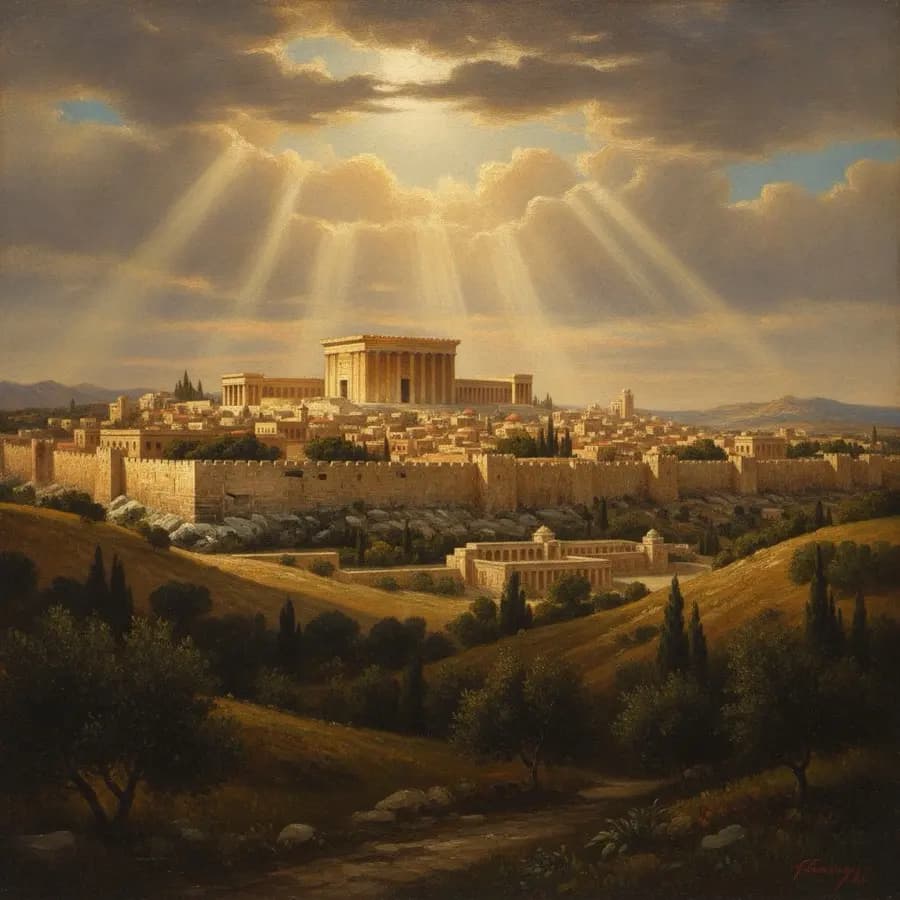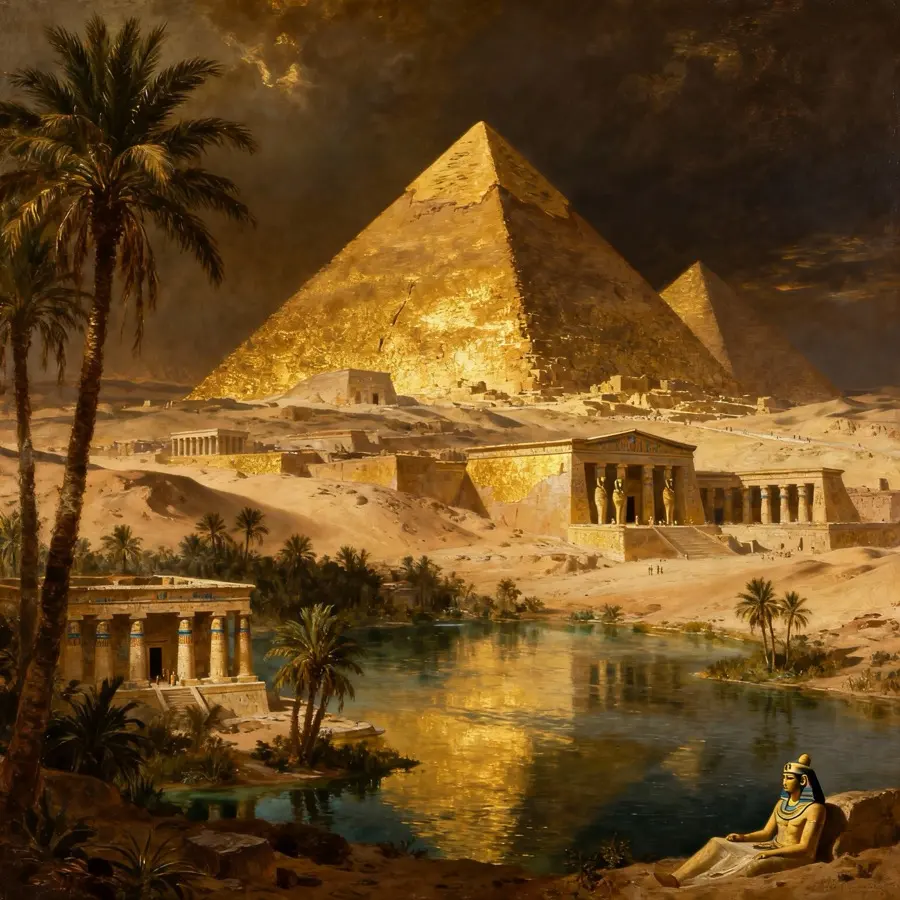
Overview: The Story That Spans 13 Chapters
Joseph's story in Genesis 37-50 is the longest continuous narrative about a single person in the entire book of Genesis. It is also one of the most psychologically rich, emotionally complex, and theologically dense stories in Scripture.
A boy loved too much by his father. Brothers consumed by jealousy. Betrayal, slavery, false accusation, forgotten prison years. And then one of the most stunning reversals in the ancient world: a Hebrew prisoner becoming the right hand of Pharaoh.
If you've heard Joseph's story as a children's tale, you've likely only heard part of it. The full account is more adult, more morally complicated, and more moving than the simplified version.
Part 1: The Favored Son (Genesis 37)
Jacob (also called Israel) had twelve sons, but Joseph was his favorite. Jacob "loved Joseph more than any of his other sons, because Joseph had been born to him in his old age" (Genesis 37:3). He made Joseph an elaborately ornamented robe, the famous "coat of many colors," which was a visible, daily reminder of the favoritism to his brothers.
Joseph also had two dreams that he shared with his family:
In the first, sheaves of grain belonging to his brothers all bowed down to his sheaf. In the second, the sun, moon, and eleven stars all bowed to him. Even Jacob was troubled by the second dream. The brothers "hated him all the more because of his dream and what he had said" (Genesis 37:8).
The Plot Against Joseph
When Joseph was sent by Jacob to check on his brothers grazing flocks far from home, the brothers saw him approaching and their resentment crystallized into action. Some wanted to kill him. Reuben, the oldest, suggested throwing him into an empty cistern instead, intending to rescue him later. While Reuben was absent, the other brothers pulled Joseph out of the pit and sold him to a caravan of Ishmaelite merchants heading to Egypt. The price: twenty pieces of silver.
They returned to their father with Joseph's robe soaked in goat's blood. Jacob was devastated, refusing all comfort, declaring he would mourn his son until he died.
"Meanwhile, the Midianites sold Joseph in Egypt to Potiphar, one of Pharaoh's officials, the captain of the guard." (Genesis 37:36)
Part 2: Potiphar's House and the False Accusation (Genesis 39)
In Egypt, Joseph was purchased by Potiphar, a high-ranking official in Pharaoh's court. And here the text makes a point that will repeat throughout Joseph's story:
"The Lord was with Joseph so that he prospered... When his master saw that the Lord was with him and that the Lord gave him success in everything he did, Joseph found favor in his eyes." (Genesis 39:2-4)
Potiphar gave Joseph charge of his entire household. Everything under Joseph's management prospered.
Potiphar's Wife
Potiphar's wife repeatedly attempted to seduce Joseph. He refused each time, saying: "How then could I do such a wicked thing and sin against God?" (Genesis 39:9). When she grabbed his cloak and he fled, she held the cloak and falsely accused him of assault to her husband.
Potiphar, understandably furious, had Joseph thrown into prison.
But again, the text notes: "The Lord was with him; he showed him kindness and granted him favor in the eyes of the prison warden" (Genesis 39:21). Joseph eventually managed the entire prison.
Part 3: The Prison Dreams (Genesis 40)
While in prison, Joseph was placed in charge of two of Pharaoh's officials who had been imprisoned: the chief cupbearer and the chief baker. Both had troubling dreams the same night. Joseph told them:
"Do not interpretations belong to God? Tell me your dreams." (Genesis 40:8)
Joseph interpreted correctly: the cupbearer would be restored to his position in three days; the baker would be executed. Both came true exactly as Joseph had said.
Joseph asked the cupbearer one thing: "Remember me... mention me to Pharaoh and get me out of this prison" (Genesis 40:14).
"The chief cupbearer, however, did not remember Joseph; he forgot him." (Genesis 40:23)
Two more years passed. Joseph remained in prison.
Part 4: Pharaoh's Dreams and the Reversal (Genesis 41)
Two years later, Pharaoh had two dreams that disturbed him deeply. Seven fat cows emerged from the Nile, then seven thin cows appeared and devoured them. Seven healthy heads of grain appeared on a stalk, then seven withered heads swallowed them.
None of Pharaoh's wise men could interpret the dreams. The cupbearer suddenly remembered Joseph.
Joseph was summoned from prison, cleaned up, and brought before the most powerful ruler in the world.
"I cannot do it," Joseph replied to Pharaoh, "but God will give Pharaoh the answer he desires." (Genesis 41:16)
Joseph's interpretation: seven years of extraordinary abundance throughout Egypt, followed by seven years of severe famine. Joseph's recommendation: appoint a wise man to manage a 20% tax on grain during the years of plenty, storing it for the coming famine.
Pharaoh's response was immediate:
"Can we find anyone like this man, one in whom is the spirit of God?" (Genesis 41:38)
Pharaoh appointed Joseph as second in command over all of Egypt. He was 30 years old. Thirteen years had passed since his brothers threw him in that pit.
Part 5: The Brothers Come to Egypt (Genesis 42-45)
The famine struck as Joseph predicted, and it affected the entire region, including Canaan where Jacob and his family lived. Jacob sent his ten older sons to Egypt to buy grain. He kept Benjamin, his youngest and now-favorite son, home.
Joseph recognized his brothers when they bowed before him. They did not recognize him. He was Egyptian in dress, manner, and authority. He was also the last person they would have expected to see.
Joseph's response was not immediate reconciliation. He tested them, demanding they bring Benjamin to Egypt, holding Simeon as collateral. He wanted to see if they had changed.
When the brothers returned with Benjamin, Joseph was overcome with emotion at seeing his full brother. He had to leave the room to weep privately.
The final test: Joseph had his silver cup hidden in Benjamin's sack, then had his steward catch them and declare Benjamin would be enslaved as punishment. Judah, the same brother who had suggested selling Joseph, now offered himself as a slave in Benjamin's place to spare their youngest brother and their father's grief.
That was enough.
Part 6: The Revelation (Genesis 45)
"Then Joseph could no longer control himself before all his attendants, and he cried out, 'Have everyone leave my presence!' So there was no one with Joseph when he made himself known to his brothers." (Genesis 45:1)
"I am Joseph! Is my father still living?" (Genesis 45:3)
His brothers were terrified. After everything they had done.
"And he kissed all his brothers and wept over them. Afterward his brothers talked with him." (Genesis 45:15)
Joseph moved his entire family (70 people) to the Egyptian region of Goshen, where they were provided for throughout the rest of the famine. Jacob, who had spent years believing his son was dead, got to see Joseph one more time before he died.
Part 7: The Theological Heart of the Story (Genesis 50:20)
After Jacob died, the brothers feared Joseph would now take revenge. They sent a message claiming Jacob had instructed Joseph to forgive them.
Joseph wept when he heard this. And then he said what has become one of the most quoted verses in Genesis:
"You intended to harm me, but God intended it for good to accomplish what is now being done, the saving of many lives." (Genesis 50:20)
This verse is the theological core of the entire Joseph narrative. It doesn't minimize the brothers' sin: they genuinely intended harm. It doesn't make suffering unreal. It says that God works through human betrayal, injustice, and suffering without causing or approving of it, weaving it into a larger purpose that human eyes could not see at the time.
Key Lessons From Joseph's Story
1. Faithfulness in Obscurity
Joseph remained honest and faithful in Potiphar's house, in prison, and in the prison's daily management, in situations where no one of importance was watching. Integrity in obscurity preceded his public reward.
2. God's Sovereignty Over Human Injustice
Joseph's story doesn't promise that innocent people won't suffer injustice. It shows that injustice does not have the final word.
3. The Shape of Forgiveness
Joseph's forgiveness was not naive or immediate. He tested his brothers before revealing himself, not out of cruelty but to see whether they had changed. True reconciliation involved seeing evidence of repentance first.
4. Patience as Faith
Joseph waited 13 years from the pit to the palace, and many years more before his family reunion. The story normalizes long, painful waiting as part of God's pattern, not as evidence of God's absence.
Experience Joseph's Story in Audio
BibleNow tells Joseph's story in its narrated Bible stories, chapter by chapter, with clear narration and on-screen text that lights up with the voice. You can add a calm ambient sound if you like. Whether you're driving, exercising, or winding down at night, you can hear this ancient story in a way that brings it to life.
Frequently asked questions
What is the story of Joseph in the Bible about?
Joseph's story spans Genesis 37-50. He was the eleventh of Jacob's twelve sons and his father's favorite, which bred jealousy among his brothers. They threw him into a pit and sold him to slave traders heading to Egypt. In Egypt, Joseph served faithfully, was falsely accused by his master's wife, and was thrown into prison. While in prison, he interpreted dreams accurately. Eventually, Pharaoh summoned him to interpret two disturbing dreams about Egypt's future. Joseph predicted seven years of plenty followed by seven years of famine and was appointed to manage Egypt's food reserves, effectively becoming the second most powerful man in Egypt. When his brothers came to Egypt desperate for food during the famine, Joseph revealed himself and forgave them.
What does the coat of many colors mean in the Joseph story?
Genesis 37:3 says Jacob 'made Joseph a richly ornamented robe' (sometimes translated as 'coat of many colors'). This robe was a symbol of Jacob's favoritism: it was an unusual, costly garment that set Joseph apart from his brothers. When the brothers stripped Joseph of it before throwing him in the pit, they were symbolically stripping him of his father's favor. They later dipped it in goat's blood and presented it to Jacob, allowing their father to conclude Joseph was dead.
Why did Joseph's brothers sell him into slavery?
The brothers' jealousy had multiple roots: Jacob's visible favoritism, Joseph's dreams that implied his family would bow to him (Genesis 37:7-9), and possibly Joseph reporting negatively on his brothers' behavior to their father (Genesis 37:2). The text says they 'hated him and could not speak a kind word to him' (Genesis 37:4). When they saw him approaching their camp far from home, some wanted to kill him. Judah suggested selling him instead, presenting it as mercy, though ultimately motivated by profit.
What is the main lesson from the story of Joseph?
Several themes emerge: (1) God's sovereignty: 'You intended to harm me, but God intended it for good' (Genesis 50:20) shows that human betrayal does not derail God's purposes; (2) faithfulness in suffering: Joseph remained honest and faithful in Potiphar's house and in prison; (3) forgiveness: Joseph's weeping reunion with his brothers is one of the most moving forgiveness scenes in all of Scripture; (4) patience: Joseph waited 13 years from slavery to the palace, and many more before seeing his family again.

Live it in BibleNow
Listen to Bible stories with their painting, read Scripture on paper or at night, and ask Lumi anything.